Wednesday, 25 May 2022

Draft 2 Helga’s Story


Computer, Laptop, Notebook, Pen, Table

I’m still trying to work out a good title for this story. I’m considering something like Belonging to the Land because that concept is important in both parts of the story and is perhaps even what draws the two story threads together.

I’ve settled on two first person narratives:

  • Present tense for Jamie in 2001-2003
  • Past tense for Helga, 1925 -1947

A major part of this new edit has been changing from third person to first and past to present. As I’ve now started on another edit I’m noticing places where I haven’t made that transition.

I’ve also had to put transition into some chapters- the end of the “Jamie” ones, showing her grandmother about to remember her back story.

One of the middle-strength characters has a disability. This is quite significant to the plot.  I‘ve had to emphasize that a little more.

One chapter needed some expansion about a character’s enjoyment of being out of doors I needed to use the senses more here, and especially those other than sight. We often deal with the visual but forget the other senses.

Another middle-strength character needed some expansion. I’ve made him a little contradictory and I realise this is because I hadn’t quite worked out who he was before I started writing.

Helga has to learn English and Welsh. I deal with this in one chapter but rather repeat myself. I’ve had to restructure that chapter. I have some characters speaking in Welsh occasionally.  I haven’t translated this but the meaning is conveyed by the way other characters answer in English or by their reaction which is shown through inner monologue.

Even though an edit at this stage is all about structure, I also noticed some inconsistencies in the spelling of names and also of Ma/ Mam - I favour Mam. “Find and replace” dealt with that quite nicely. Throughout I referred to a “patisserie”. That is a French word. I’ve now changed this to the German Konditorei. All of the Schellberg books have a sprinkling of German words.

And so now, onwards with Draft 3.

Saturday, 7 May 2022

Wartime Farm by Peter Ginn, Ruth Goodman and Alex Langlands

 I picked up this fascinating book at the Book Nest in the Millgate Shopping Centre in Bury, the town in which I live. The Book Nest is a delightful installation; there are a couple of chairs on which you are invited to sit and engage in conversation with anyone else who drops by or where you can simply sit and read.  There are two bookshelves where you can drop off books you’ve finished with and where you can pick others you’ve not yet read. You may donate a few coins or a note for the privilege if you so wish.

I was dropping off a few books the other week and this one jumped out at me.

It is hefty volume and retails at £20.00.  It’s the book of the TV series, which provided 36 hours of viewing.

Although it couldn’t be called a scholarly work, it’s much more than a coffee table book.  It is attractive enough to grace any coffee table or book shelf. It is full of interesting and useful information and both it and the TV programme are based on the three writers / presenters working on a facsimile World War II farm. It was particularly interesting for me because the farm they used is opposite where I used to live in Hampshire.

There is information in here about farming, mobilising people, how people adapted their homes and gardens, wartime food, livestock, home defences, making do and mending and morale.

We are currently living in extraordinary times but still the austerity of that time is astounding. Clothing coupons only generally allowed for one new outfit per person per year. 70% of food was imported before the war so adjustments had to be made very quickly. Though we look back on this time with nostalgia, we might do well to remember that civilians lived in constant fear. Certainly towns were more likely to be bombed, but the countryside was likely to be invaded.

Modern methods were rapidly brought into farming. Livestock was reduced to allow for more arable land as this was a more efficient way of feeding people. Householders began to keep pigs and poultry as a way of supplementing the farms that could no longer produce so much meat. And recycling was very common.  Why did we stop doing it?

Sadly we’ve dropped many of the good habits we took up during World War II. We may have to take them up again now.      

Friday, 6 May 2022

Hidden Wars


Despair, War, Helplessness, Unhappy, Desperate, Cry

War isn’t just about young men and women doing the dirty work of national leaders and high-ranking military officers. Certainly it’s bad enough that these younger people are forced to target each other with destructive weapons. Even worse that civilians get caught in the crossfire and that civilians have to fight other battles.

The Russian invasion of Ukraine is terrible. It’s having ghastly repercussions for ordinary Russian people as well as Ukrainian civilians.  We might cry out, well they voted for Putin so they are as guilty as he is. Why did they vote for him? Presumably not in order to do evil. Motives could range from self-preservation to a genuine belief that he offers the best regime.

The sanctions the world has imposed on Russia will make life very uncomfortable for civilians. And there will be repercussion for the rest of the world in a reduction in resources and the threat of other sorts of hostilities such as cyber-attacks.

In war time shortages of food, clothing, energy and medical supplies arise. Then there is the shift in moral and the fear of death or injury. Of course there is also actual death and injury. Life become hard whether one is involved in the actual fighting or not.  

World War II was in effect an extension of World War 1. Germany was left in a very weak position. The Nazi party was able to appeal to the low morale of the ordinary person.       

What a shame we can’t take note of the fact that we all live on the same planet and working together could be quite effective Weaponised war might seem so terrible that we could wonder why we ever get involved in it. Does it happen when hidden wars and cooperation have failed?   

Saturday, 30 April 2022

The Bamboo Bracelet by Merilyn Brason

This is the moving experience of one woman who lived in an internment camp for much of the duration of World War II .This story is told by her daughter, who was actually conceived during the internment.

Merilyn Brason has enjoyed a multicultural life having lived in China, Nigeria and Australia. She has experience of radio journalism and she is a retired psychotherapist.

We are left with the impression that she is well qualified to write this book  that is based on her mother’s memories and notes.   

We gain valuable insight in this work to what it was like in an internment camps. These are different from POW camps and the Nazi organised concentration camps: there is some mingling of men and women. Protagonist Ronny and her husband Pat, along with their good friend Reg enjoyed living in “shanty” home.

A whole village or even town exists within the camp. There are shops, cafes and even a barber’s. Our protagonist even manages to gain an income by sewing garments for the richer people in the camp.

We know all along that Ronny will survive because her daughter is here to tell the tale. Yet we are gripped throughout.

This story is extremely well told.   

Wednesday, 20 April 2022

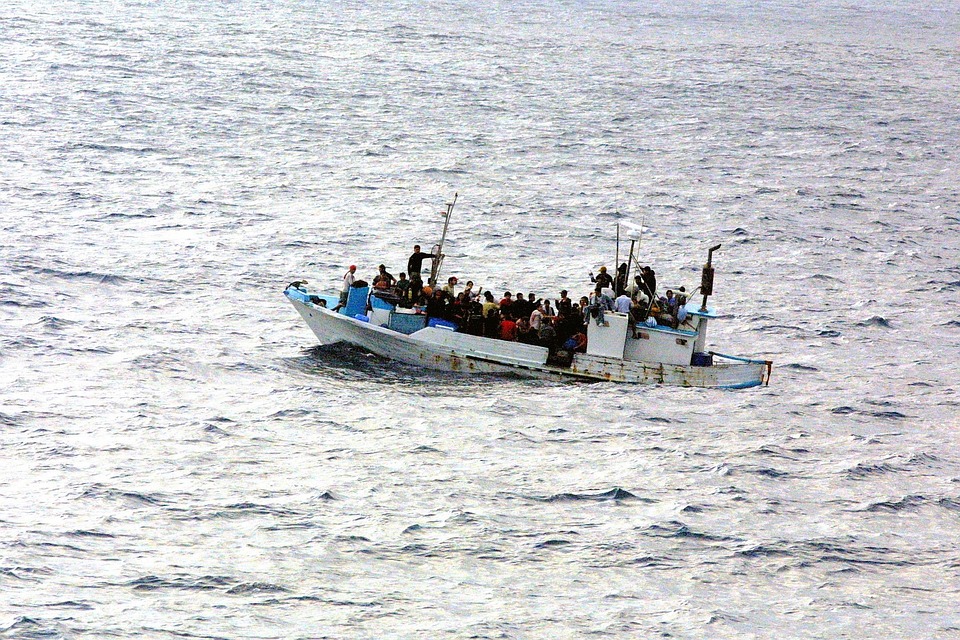
Sending asylum seekers to Rwanda?

 Boat, Water, Refugee, Escape, Asylum, Politically

My gut reaction to this is to say it is abhorrent.

I was taught at an early age to look for the counter argument to anything I was sure I was right about. Good journalists do this anyway, don’t they?

So I try to understand why some people think this is all right. And then offer the counter argument to that.  

A major point seems to be – why do they want to come to the UK? Why won’t they go to other parts of Europe and why won’t other parts of Europe have them?  In fact, other countries have taken in far more refugees than we have. English may have something to do with it. More people speak English so getting asylum in an English-speaking country is more appealing.

Patel wants so stop the “evil” boat trade. Sure, the people who offer these migrants the services are asking for a lot of money for a poor service. There is criminal neglect. Even so, so desperate are these people to get away from the regime that have felt  that it is worth it to them  We would do well to remember that people who dare to make these journeys are brave and creative and will eventually be an asset to us.

We’re running out of room (Lebensraum? Now where have I heard that before?) Rwanda has plenty. Well, despite the fact that it’s a bit cosy here in places we’re not actually running out of room.  Why Rwanda? Lots of other African states have lots of room as well. Why send then to a state that hasn’t behaved all that well in the past. Even if we pick another African state, though, what does it say about our attitude?

It’s only the illegal immigrants we want to send there for processing, How do we know they’re “illegal” before we’ve decided whether  to give them asylum or not; a soon  as we decided  to give them asylum they become legal.  By the way it is not illegal to seek asylum.      

Australia has done the same. Except that it’s ending it now. It was used for processing those who arrived by boat. The argument was that it was to prevent deaths by boat travel.  Two problems here: they’ve already done the life-threatening travel by boat by the time they’re processed. There is an implication that processing them remotely is a punishment rather than an answer to a logistics problem.

Some added concerns

Rwanda, given its history, is not a good choice.

Even the Nazis refrained in the end from sending Jews to Madagascar.

There is world-wide perception including from the UN that we are acting illegally in this.        


My reasoned reaction to this is to say that it is extremely abhorrent


Thursday, 7 April 2022

The Bamboo Bracelet by Merilyn Brason


I attended a very interesting talk last week with the National Women’s Register. Merilyn Brason has written her mother’s story about her time in a prisoner of war camp. Her mother, Ronny Rynd, was holidaying in the Baugio   region in the mountains while her husband was still in Manila when Pearl Harbour happened. 

Rynd was pregnant with her older daughter at the time. This daughter is born in the camp. Brason was actually conceived in the camp.

Rynd‘s first camp is more benign that the one where she eventually resides.  She fights the authorities to be allowed to join her husband at the overcrowded Manila camp.

How do these camps compare with the ones the Nazis created?  They seem as cruel and the human spirit overcomes as well here, A whole society develops and I’m reminded of what happens when Clara in Clara’s Story is Theresienstadt. It does seem though that it was easier for men and women to mix here than it was in the German-built camps.

Brason relies on her mother’s letters and notes and also remembers the anecdotes her mother told her family. Rynd always wanted her story to be told but couldn’t seem to marshal her material into a coherent shape. Rynd has done that.

I asked her a little about the process.  Did she have to leave out some material? No, in fact she had to do more research in order to complete the story. I wasn’t able to check but I suspect she used those three writer’s tools that I have discussed often:

  1. Primary resources
  2. Repeated experience
  3. Writer’s imagination

There is one big difference between me and Brason. I am a writer and I was pleased to find my material in order to be able to write this cycle of books. Brason doesn’t see herself as a writer but was confronted with this material and felt obliged to write the story.

We have in common that we are telling the story of someone who no longer has the voice to tell their own story.  We also have both found some rich primary resources. We make our work readable by using techniques employed in fiction.   

I have to confess to not having read the book yet but it is on order. I shall do another review of it once I have read it.