Saturday, 30 April 2022

The Bamboo Bracelet by Merilyn Brason

This is the moving experience of one woman who lived in an internment camp for much of the duration of World War II .This story is told by her daughter, who was actually conceived during the internment.

Merilyn Brason has enjoyed a multicultural life having lived in China, Nigeria and Australia. She has experience of radio journalism and she is a retired psychotherapist.

We are left with the impression that she is well qualified to write this book  that is based on her mother’s memories and notes.   

We gain valuable insight in this work to what it was like in an internment camps. These are different from POW camps and the Nazi organised concentration camps: there is some mingling of men and women. Protagonist Ronny and her husband Pat, along with their good friend Reg enjoyed living in “shanty” home.

A whole village or even town exists within the camp. There are shops, cafes and even a barber’s. Our protagonist even manages to gain an income by sewing garments for the richer people in the camp.

We know all along that Ronny will survive because her daughter is here to tell the tale. Yet we are gripped throughout.

This story is extremely well told.   

Wednesday, 20 April 2022

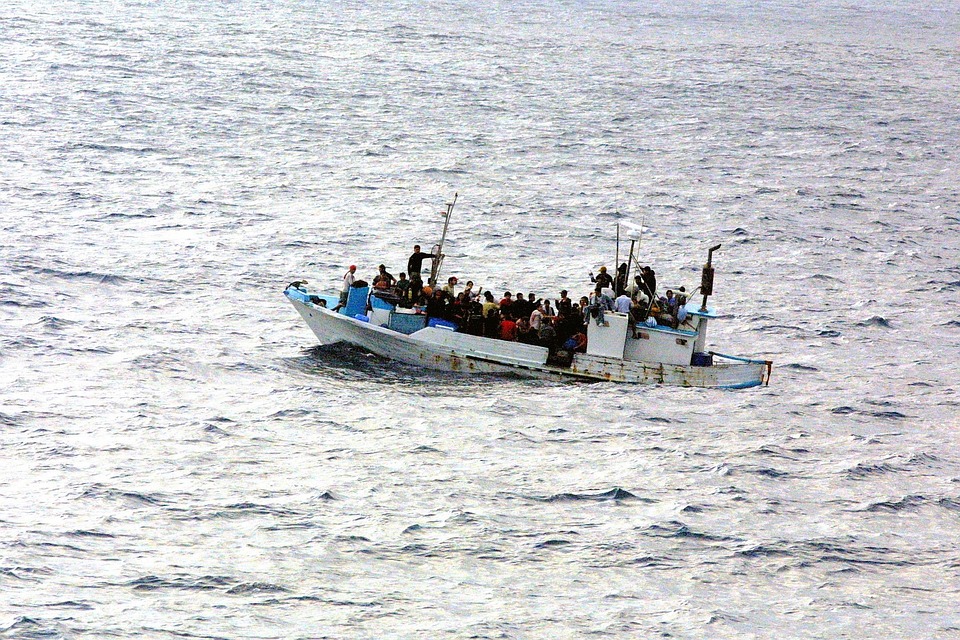
Sending asylum seekers to Rwanda?

 Boat, Water, Refugee, Escape, Asylum, Politically

My gut reaction to this is to say it is abhorrent.

I was taught at an early age to look for the counter argument to anything I was sure I was right about. Good journalists do this anyway, don’t they?

So I try to understand why some people think this is all right. And then offer the counter argument to that.  

A major point seems to be – why do they want to come to the UK? Why won’t they go to other parts of Europe and why won’t other parts of Europe have them?  In fact, other countries have taken in far more refugees than we have. English may have something to do with it. More people speak English so getting asylum in an English-speaking country is more appealing.

Patel wants so stop the “evil” boat trade. Sure, the people who offer these migrants the services are asking for a lot of money for a poor service. There is criminal neglect. Even so, so desperate are these people to get away from the regime that have felt  that it is worth it to them  We would do well to remember that people who dare to make these journeys are brave and creative and will eventually be an asset to us.

We’re running out of room (Lebensraum? Now where have I heard that before?) Rwanda has plenty. Well, despite the fact that it’s a bit cosy here in places we’re not actually running out of room.  Why Rwanda? Lots of other African states have lots of room as well. Why send then to a state that hasn’t behaved all that well in the past. Even if we pick another African state, though, what does it say about our attitude?

It’s only the illegal immigrants we want to send there for processing, How do we know they’re “illegal” before we’ve decided whether  to give them asylum or not; a soon  as we decided  to give them asylum they become legal.  By the way it is not illegal to seek asylum.      

Australia has done the same. Except that it’s ending it now. It was used for processing those who arrived by boat. The argument was that it was to prevent deaths by boat travel.  Two problems here: they’ve already done the life-threatening travel by boat by the time they’re processed. There is an implication that processing them remotely is a punishment rather than an answer to a logistics problem.

Some added concerns

Rwanda, given its history, is not a good choice.

Even the Nazis refrained in the end from sending Jews to Madagascar.

There is world-wide perception including from the UN that we are acting illegally in this.        


My reasoned reaction to this is to say that it is extremely abhorrent


Thursday, 7 April 2022

The Bamboo Bracelet by Merilyn Brason


I attended a very interesting talk last week with the National Women’s Register. Merilyn Brason has written her mother’s story about her time in a prisoner of war camp. Her mother, Ronny Rynd, was holidaying in the Baugio   region in the mountains while her husband was still in Manila when Pearl Harbour happened. 

Rynd was pregnant with her older daughter at the time. This daughter is born in the camp. Brason was actually conceived in the camp.

Rynd‘s first camp is more benign that the one where she eventually resides.  She fights the authorities to be allowed to join her husband at the overcrowded Manila camp.

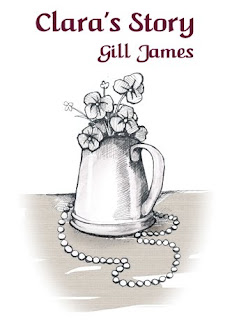
How do these camps compare with the ones the Nazis created?  They seem as cruel and the human spirit overcomes as well here, A whole society develops and I’m reminded of what happens when Clara in Clara’s Story is Theresienstadt. It does seem though that it was easier for men and women to mix here than it was in the German-built camps.

Brason relies on her mother’s letters and notes and also remembers the anecdotes her mother told her family. Rynd always wanted her story to be told but couldn’t seem to marshal her material into a coherent shape. Rynd has done that.

I asked her a little about the process.  Did she have to leave out some material? No, in fact she had to do more research in order to complete the story. I wasn’t able to check but I suspect she used those three writer’s tools that I have discussed often:

  1. Primary resources
  2. Repeated experience
  3. Writer’s imagination

There is one big difference between me and Brason. I am a writer and I was pleased to find my material in order to be able to write this cycle of books. Brason doesn’t see herself as a writer but was confronted with this material and felt obliged to write the story.

We have in common that we are telling the story of someone who no longer has the voice to tell their own story.  We also have both found some rich primary resources. We make our work readable by using techniques employed in fiction.   

I have to confess to not having read the book yet but it is on order. I shall do another review of it once I have read it.              

Thursday, 24 March 2022

Can we avoid racism?


This cropped up when we discussed in my book group Girl, Woman, Other by Bernadine Evaristo.    One comment we made was that here were a group of women who were all “other” and perhaps what makes us all alike is that we are all “other”.

One lady mentioned that her brother is very racist and she isn’t.  Yet they were brought up exactly the same way.  

There is nothing wrong with having a reaction to the strange, to the other. Xenophobia can be forgiven; it is what one does in response to that feeling that counts. I can name a few reactions: I was intrigued with how white my friend Celestine’s socks looked next to her black legs.  My daughter was fascinated that her friend Craig’s hair didn’t move in the wind.  Who were these tall, thin ladies who wore the long skirts that looked like fine sheets wrapped around them and who wrangled with my grandmother over the remnants box in the market? What are they cooking? How interesting it is that the extended family all gather at the house opposite to us every Friday evening.

We can say, “This is interesting. I’d like to know more.”  We might eventually say.  “That’s fine for you but it’s not what I want.” Unfortunately some choose to say “What you’re doing is rubbish and that makes me superior to you.” I suspect that often in the latter case something nearer the truth is “What you’re doing scares me half to death and I won’t have anything to do with it.”

There are some genuine concerns too. Foreign workers come and do the job for a fraction of the cost.  Of course that’s upsetting.  Take what is happening with P & O at the moment. Would you want to go on a ferry operated by an inexperienced work force that is being paid starvation wages? How would you feel if you were one of the sacked workers?  There may have been some mismanagement of the funds provided by the government but the firm is where it is now and the sacked workers would be out of a job anyway. Operation Brock is in force at the moment and will become more of permanent feature if this ferry firm remains inoperative.              

Do some groups make themselves more “other” by celebrating that otherness?

I go back again my friends or my teenage years. They were just Elaine, Theo, Ingrid, Rene, Monica  and Mavis. I cringe even as I tell you that they are black and Windrush generation.

My book group recongised all sorts of “otherness” and in particular we found the women in Evaristo’s book other than us; we are a group of middle class women, most of whom come from working class backgrounds, who now live in the north of England. The women in Evaristo’s book are very much from London and very multicultural.  Or is even that too “boxy”? In the end aren’t there just “people”?   Will my work with the Schellberg Cycle make that clearer?   

Wednesday, 9 March 2022

Are we bystanders?


Ukraine, War, Flag, Soldier, Ruins

We are currently watching, most of us in horror, a strong country invading a peace-loving neighbour. Is it about land ownership? Annoyance about NATO’s reach? Or is just the work of a megalomaniac?

Putin is being compared with Hitler and some people are suggesting that when we see him in the media it is not always Putin himself but a lookalike. A few even mention clones. Is he really like the charismatic failed artist who could make excellent speeches but who in the end spent more time training his dogs than working on war strategy? Is Putin more in control, actually more evil and more to be feared?  

Good people living in Nazi Germany couldn’t find their tribe. At least now with social media we can though even here we have to put our heads above the parapet and risk attracting trolls. Activist Russians have found their way around bans on social media and are giving us the news about what Russian people are actually thinking. Not all are obeying blindly or through fear.  

But we need a little caution before we expect too much of ordinary Russian people. Putin has made the spreading of fake news a crime. So should in fact lock himself up and throw away the key?  He said there would be no invasion of the Ukraine.  He said this isn’t a war. This is an invasion. This is a war.  And he is breaking international law in that he is attacking civilians.

I personally don’t think we in the UK are doing enough. Boris Johnson has spoken about sponsorship and there is now a points system for allowing Ukrainian refugees into our country.  Compare that with the free travel offered by Germany, who also accepted just under a million Syrian refugees. We seem to take some pride in the Kindertransport. No doubt a lot of good and brave people worked to make that happen. But it offered help to a mere 10,000 children and then there had to be sponsorship as well – the equivalent to £3000 today. 10,000 compared with the 6,000,000 who were murdered. I’ve read the minutes of the committee meeting that set this up. There was a lot of hesitancy and a lot of fear that if we did more, anti-Semitism might grow in the UK. It ought to have been a given that it would not be tolerated.       

Are we bystanders? Should we now get off the fence?         

Tuesday, 8 March 2022

Bruno and Frida by Tony Bradman


The story is set at the end of World War II as the Russians start to occupy Nazi Germany. Bruno’s mother is killed as the Russians attack. Bruno is befriended by the dog Frida, and by an old lady who takes him in for a while.  Frida is a suicide bomber dog and Bruno’s first task when he meets her is to remove her vest.

As the Russian occupation takes hold, Bruno has to move on and try and find his grandparents.  He has to leave the old lady behind. He never sees her again and he never finds out what happens to her. He writes to her daughter but she does not reply.

Bruno finds his grandparents and goes on to live a happy life.  He marries, becomes a doctor and has a family.  His granddaughter interviews him about being a refugee.  The family are sympathetic towards the Syrian refugees.     

This is a Barrington Stoke book and created for less able readers.

 Barrington Stoke claims “Our books are tested for children and young people by children and young people.”  Usually they commission a known writer to create the text and their own editors then work on it to make it suitable for the target reader.  

Tony Bradman offers an historical note at the end and also points out how German attitudes have changed since the end of World War II. 


Saturday, 19 February 2022

The Difference between a Series and a Cycle


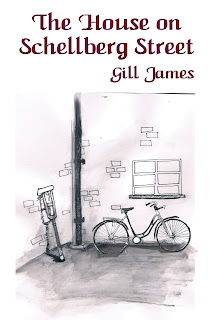
I’m very keen on my group of Schellberg novels being called a cycle rather than a series. One of the beauties of this is that they can be read in any order. Though the reader may know the outcome of particular plot line, different books in the cycle give them another angle on what has actually happened.

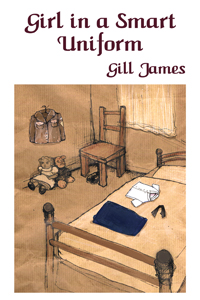
I’m very aware of this as I get into the early chapters of Helga’s Story. Anyone who has read Girl in a Smart Uniform will have met her already. She becomes the girlfriend of the protagonist’s brother in that book. Yesterday I wrote the scene of the squashed cakes from Helga’s point of view of Helga.  In Girl in a Smart Uniform we saw that scene through Bear’s eyes.

Helga is also interesting for us in that she shares some characteristics with Renate whom, we meet in The House onSchellberg Street. Both girls only find out in their teens that they are Jewish. Both girls feel more German that Jewish.

I’m finding that each book I write suggests another story. Planned after this one is a story about someone who worked on the edge of the German resistance. I wonder whether it will ever finish. Because there are some other pieces of historical fiction I would like to write.