Wednesday, 9 March 2022

Are we bystanders?


Ukraine, War, Flag, Soldier, Ruins

We are currently watching, most of us in horror, a strong country invading a peace-loving neighbour. Is it about land ownership? Annoyance about NATO’s reach? Or is just the work of a megalomaniac?

Putin is being compared with Hitler and some people are suggesting that when we see him in the media it is not always Putin himself but a lookalike. A few even mention clones. Is he really like the charismatic failed artist who could make excellent speeches but who in the end spent more time training his dogs than working on war strategy? Is Putin more in control, actually more evil and more to be feared?  

Good people living in Nazi Germany couldn’t find their tribe. At least now with social media we can though even here we have to put our heads above the parapet and risk attracting trolls. Activist Russians have found their way around bans on social media and are giving us the news about what Russian people are actually thinking. Not all are obeying blindly or through fear.  

But we need a little caution before we expect too much of ordinary Russian people. Putin has made the spreading of fake news a crime. So should in fact lock himself up and throw away the key?  He said there would be no invasion of the Ukraine.  He said this isn’t a war. This is an invasion. This is a war.  And he is breaking international law in that he is attacking civilians.

I personally don’t think we in the UK are doing enough. Boris Johnson has spoken about sponsorship and there is now a points system for allowing Ukrainian refugees into our country.  Compare that with the free travel offered by Germany, who also accepted just under a million Syrian refugees. We seem to take some pride in the Kindertransport. No doubt a lot of good and brave people worked to make that happen. But it offered help to a mere 10,000 children and then there had to be sponsorship as well – the equivalent to £3000 today. 10,000 compared with the 6,000,000 who were murdered. I’ve read the minutes of the committee meeting that set this up. There was a lot of hesitancy and a lot of fear that if we did more, anti-Semitism might grow in the UK. It ought to have been a given that it would not be tolerated.       

Are we bystanders? Should we now get off the fence?         

Tuesday, 8 March 2022

Bruno and Frida by Tony Bradman


The story is set at the end of World War II as the Russians start to occupy Nazi Germany. Bruno’s mother is killed as the Russians attack. Bruno is befriended by the dog Frida, and by an old lady who takes him in for a while.  Frida is a suicide bomber dog and Bruno’s first task when he meets her is to remove her vest.

As the Russian occupation takes hold, Bruno has to move on and try and find his grandparents.  He has to leave the old lady behind. He never sees her again and he never finds out what happens to her. He writes to her daughter but she does not reply.

Bruno finds his grandparents and goes on to live a happy life.  He marries, becomes a doctor and has a family.  His granddaughter interviews him about being a refugee.  The family are sympathetic towards the Syrian refugees.     

This is a Barrington Stoke book and created for less able readers.

 Barrington Stoke claims “Our books are tested for children and young people by children and young people.”  Usually they commission a known writer to create the text and their own editors then work on it to make it suitable for the target reader.  

Tony Bradman offers an historical note at the end and also points out how German attitudes have changed since the end of World War II. 


Saturday, 19 February 2022

The Difference between a Series and a Cycle


I’m very keen on my group of Schellberg novels being called a cycle rather than a series. One of the beauties of this is that they can be read in any order. Though the reader may know the outcome of particular plot line, different books in the cycle give them another angle on what has actually happened.

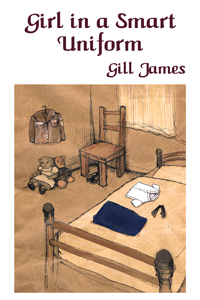
I’m very aware of this as I get into the early chapters of Helga’s Story. Anyone who has read Girl in a Smart Uniform will have met her already. She becomes the girlfriend of the protagonist’s brother in that book. Yesterday I wrote the scene of the squashed cakes from Helga’s point of view of Helga.  In Girl in a Smart Uniform we saw that scene through Bear’s eyes.

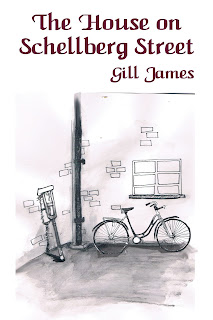
Helga is also interesting for us in that she shares some characteristics with Renate whom, we meet in The House onSchellberg Street. Both girls only find out in their teens that they are Jewish. Both girls feel more German that Jewish.

I’m finding that each book I write suggests another story. Planned after this one is a story about someone who worked on the edge of the German resistance. I wonder whether it will ever finish. Because there are some other pieces of historical fiction I would like to write.

Tuesday, 8 February 2022

Exploring the hate


I have Helga, a blond-haired German Jewess who went into hiding during World War II, now living in Wales at the beginning of the 21st century. This part of the story is seen through the eyes of her granddaughter Jamie. History seems to be repeating itself. The persecution begins again. Initially welcomed, Helga and her family are now resented by the younger generation.

It doesn’t happen overnight. The Thomas family loved the Müllers and Helga Müller has every faith that they are good people. But Jamie’s generation resent their lack of opportunity and believe that incomers such as Helga and Jamie are taking away from them what is rightfully theirs.

As ever I have planned the story in some detail. However, more than is usual this one is taking a shape of its own.

Nature - or maybe an old mineshaft – robs the Thomases of some of their land. Glenn and Owain think they have the right to take it back. Solicitors become involved but Jamie and Helga find themselves hitting a brick wall. Everyone knows everyone else and many of the people who might help Helga and Jamie seem to be related to the Thomases.

It’s my job to give all of the characters what they need rather than what they want. I’m looking for a solution that overcomes the hate.  

Tuesday, 18 January 2022

Creating Helga

 Scotland, Sheep, Clouds, Weather, Heaven

So, I’m going to be starting the sixth book in the cycle in the next few days. Helga appears in Girl in a Smart Uniform. Part of the story is already there. This is why this is a cycle not a series. It is possible to read the books in any order.

I’ve decided to set part of the novel in the early 2000s and tell the story partly from the point of view of her granddaughter who lives with her. Helga and her granddaughter are experiencing in Wales in 2002 similar attitudes to those that Helga experienced in Germany in the 1940s.

She is resilient, though, because of what happened before and reaches a point of stasis. Helga and her granddaughter are allowed to resume living peacefully in the Welsh hills.   

I have a profile for Helga: German Jewess, but blond-haired. Refuses to leave Germany but goes into hiding there. She has a child; Bear, a main character in book three is the father. She becomes strong. She meets an American at the end of the war. He buys a sheep farm in Wales. She loses her son and daughter-in-law and has to bring up her granddaughter.

The granddaughter I have yet to create. I actually quite like doing that sort of work when I sit in cafés.

There’s a lot to do yet about firming up the plot but it’s something I’m looking forward to doing over the next few weeks.

This will probably be another book with lots of dates in it. Some people have criticised this practice – not just in my work but as a general principle. I’ve read quite a few books where this happens.  I tend to not take in the dates as I read them, but can get into a chapter and wonder what is going on, then have to look back at the date.

The granddaughter will be a young adult. I don’t think this will make the book a YA text but it will certainly be read by young adults.   

I’m toying with writing each strand separately and then weaving them together afterwards. Even if I don’t write that way, I shall certainly plan that way.

.    

Sunday, 2 January 2022

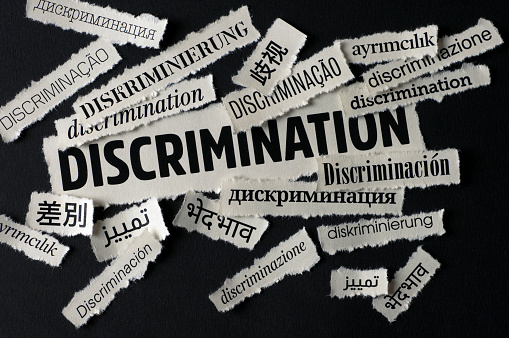
Create a ghetto – or share a few gems?

 Venice, Sightseeing, Italy, Water

It happens so easily.  We can slip into this at any time.

I’ve known about this since I was about eight years old. By then I’d got used to Celestine and John, black siblings who attended my junior school. Celestine was in my year and John was a little younger. They were always very smartly dressed and I envied the smart pleated skirts and machine-knitted jumpers that Celestine’s mum got her from Marks and Spencer’s. Celestine was born in Jamaica but John was born in England. They were Windrush generation. My but I hate these labels. I don’t even like describing them as black. I don’t remember ever being in awe of them. They were just other kids at our school. Okay, so Celestine was so much more sensible and practical than me and she was taller but that was nothing to do with her colour. We accepted them totally and they fitted in as a family. Yes, they brought along a few novelties but those  just enriched our lives actually.  

Unfortunately though that was not what happened to all of the families like theirs in my home town. If one such family moved into a house on a street, the white families started to move out. That left a group of people not knowing how to integrate into an English way of life as they didn’t have examples on their doorstep. So, they continued with the habits and routines from their homeland – even though our weather challenged these.  Now, there is nothing wrong with those routines and habits but they seem odd to the people who watch them from outside the ghetto and so misunderstandings arise. What ought to happen is an exchange of ideas. A gem-sharing.

Yes, at just eight years old I could see clearly exactly what was happening.

My grandmother and aunt lived in another small town nearby. The same issues existed there. I started going to my grandmother’s church and so did some more young people who looked like Celestine and John. They became very close friends. They weren’t “Windrush” or even “black”. They were just Celestine, John, Ingrid, Theo, Elaine, Monica, Mavis and Renee.  It’s useful being colourblind.

My aunt’s home was in private rented accommodation. She lived alone after my uncle died suddenly. Gradually Asian families moved in either side of her. It was difficult for her to move. Thank goodness. Because that stopped a ghetto forming. At first she complained about the cooking smells. “I had to tell them to stop cooking in the garden,” she said. “I couldn’t stand it.” Well arrangements were made for them to keep the kitchen window shut when they were coking. And it was her two sets of neighbours that looked after my aunt when she became very ill. She learned to like and even cook curry. She taught them the secrets of Yorkshire pudding and Victoria sponges. Gem-sharing again.

Can we live in hope? There is a building near where I live that is used as a church, a mosque, a synagogue or a temple. In our local Tesco’s a Jewish man helps a small Muslim woman reach the Halhal food from a high shelf.

We don’t have to give up what we believe in or what we value. But we can take a look at what others find important and show them what we take pride in. Gem-sharing. And we certainly shouldn’t run away scared when people who seem different from us come to live nearby.